
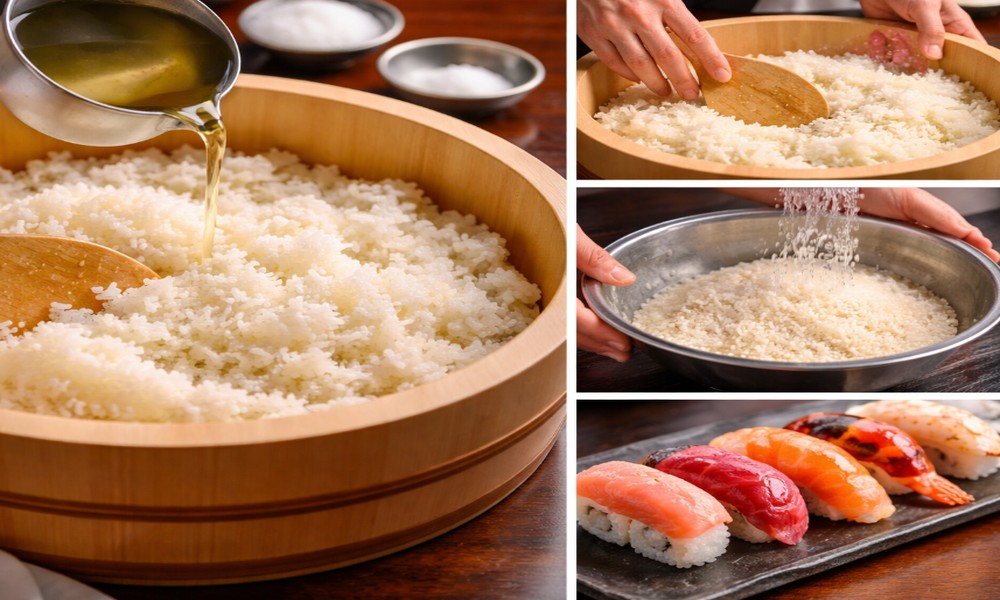
When people talk about sushi, they usually talk about the fish first. Tuna. Salmon. Uni. Maybe the sauce, maybe the presentation. But in a Japanese restaurant, we know the real truth. Sushi is only as good as the rice beneath it.
That rice, called shari, is not just a base. It is not filler. It is not there to hold everything together and stay out of the way. Shari is the heart of sushi. If it is too cold, too dry, too soft, too sharp, or too bland, the whole piece feels off. Even beautiful fish cannot save it. That may sound a little dramatic, but honestly, it is true.
A lot of people search how to make sushi rice thinking it is just about cooking rice and adding vinegar. The basic idea is simple, yes. The actual result is not. Sushi rice depends on balance, and small details matter more than people expect.
The first secret is the rice itself.
Not every rice works for sushi. You need short-grain rice with the right amount of starch so the grains can hold together without turning mushy. That part matters a lot. If the rice is too dry, it falls apart. If it is too sticky, it feels heavy and dull in the mouth. Good shari should hold its shape when formed, then loosen gently when eaten. That is the goal.
Washing the rice is another step people sometimes rush. I get it. It seems repetitive. But rinsing away excess surface starch helps create a cleaner texture. The grains should cook evenly and stay glossy, not gummy. So if someone asks me how to make sushi rice, I usually start there. Before vinegar, before seasoning, before technique, you have to respect the grain.
Then comes the vinegar blend.
This is where personality enters the rice. Every kitchen has its own style, even if the differences are subtle. A sushi vinegar blend usually includes rice vinegar, sugar, and salt, but the proportions matter. Too much vinegar and the rice becomes harsh. Too much sugar and it starts tasting flat and sweet instead of balanced. Salt should sharpen the flavor without making itself obvious.
What you want is seasoning that wakes the rice up without overwhelming it. The vinegar should lift the grain, not dominate it. It should make the rice feel alive. That is one of the hardest parts to explain, actually. Great sushi rice does not shout. It supports everything around it and still has its own quiet presence.
Texture is the next secret, and maybe the biggest one.
People often think sushi rice should be packed tightly. It should not. Proper shari has structure, but it also has air. Each grain should still feel distinct. When sushi is formed, the rice should be firm enough to support the topping but soft enough to break apart cleanly in the mouth. That lightness is what makes sushi feel elegant instead of heavy.
This is why how to make sushi rice is not just a recipe question. It is a touch question too. You can follow every measurement correctly and still end up with rice that feels wrong because it was handled too roughly or mixed without care.
And then there is temperature.
This part gets overlooked all the time. Sushi rice should not be refrigerator cold, and it should not be steaming hot either. It should be close to body temperature, maybe slightly warm, so it feels gentle and natural when eaten. Cold rice hardens and loses its character. Hot rice can affect the fish and throw off the whole bite. The right temperature brings everything together.
That is really the magic of shari. Vinegar blend, texture, temperature. None of these things seem flashy on their own, but together they decide whether sushi feels balanced or disappointing.
So when people ask how to make sushi rice, the answer is bigger than a list of ingredients. It is about choosing the right rice, seasoning it with restraint, handling it with care, and serving it at the right temperature. In a good sushi bar, rice is never an afterthought. It is the foundation, the rhythm, and sometimes, quietly, the reason the sushi works at all.
This post was written by a professional at Fortu. Fortu stands out among the top Restaurants St Petersburg FL, offering an elevated Pan-Asian dining experience in the heart of St. Petersburg, Florida. Celebrating Asia’s vibrant and diverse culture, Fortu introduces bright and bold flavors to a bright and bold city with a menu of locally and sustainably sourced options, from small bites to hearty delicacies. Whether winding down from a beach day or celebrating a special occasion, guests can enjoy a lush, alluring atmosphere and an authentic taste of Asia’s divine cuisine at one of the finest Asian Restaurant St Pete.
